

Build a Multi-Agent AI Planner Using Spring Boot, Java & Spring AI

Learn How to Build an LLM-Based Planner Agent That Orchestrates Multiple AI Agents Artificial Intelligence is rapidly evolving from simple chatbots to Agentic AI systems capable of reasoning, planning, and executing complex tasks. Instead of asking a…

Chapter 3: Extend Your AI Agent with the Model Context Protocol (MCP)
At this point, our AI agent has become much more capable. It can: However, it still has one important limitation. It cannot interact with external systems. For example, consider the following requests: All of this information exists outside the LLM—in…

Chapter 2- Giving Your AI Agent a Personality and Memory with Spring AI
Give Your Agent a Personality A language model responds differently depending on the instructions it receives. Instead of allowing the model to answer every question generically, we can define its role using a System Prompt. A system prompt acts like a…

Chapter 1- Build Production-Ready AI Agents with Spring AI, and Java
Introduction Artificial Intelligence has evolved rapidly over the past few years. Initially, AI applications were limited to answering questions, summarizing text, translating languages, or generating content. These applications are commonly referred to…

From Physical Servers to Kubernetes: The Complete Evolution of Application Networking (Explained with real example – TravelCity)
If you’ve ever tried to jump straight into Docker or Kubernetes without understanding why they exist, you’ve probably felt lost. Terms like Pods, Services, Ingress Controllers, and Load Balancers start to feel like buzzwords instead of…
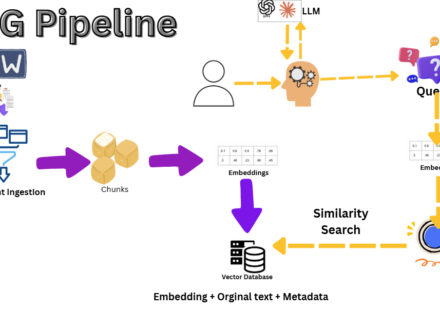
Retrieval-Augmented Generation (RAG): Architecture, Pipeline, and Enterprise Implementation
Introduction Large Language Models (LLMs) such as GPT, Claude, Gemini, and Llama have transformed how organizations build AI-powered applications. These models excel at understanding language, reasoning, and generating human-like responses. However, they…
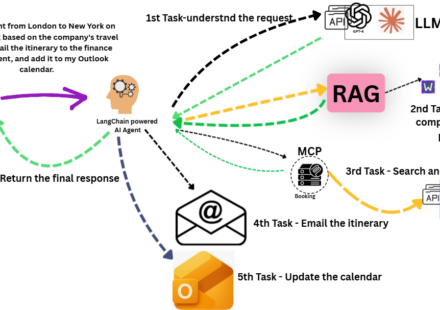
Building Enterprise AI Applications with RAG and LangChain
Large Language Models (LLMs) such as GPT, Claude, and Gemini are excellent at understanding language, reasoning, and generating human-like responses. However, they have one major limitation—they do not know your organization’s private knowledge…
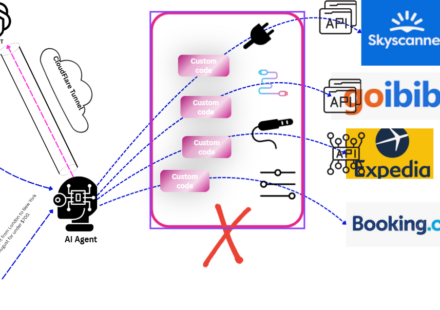
From ChatGPT to AI Agents to MCP: Understanding the Evolution of Enterprise AI
Introduction Over the past couple of years, we’ve all become familiar with AI tools like ChatGPT, Claude, Gemini, and Microsoft Copilot. They can answer questions, summarize documents, write emails, generate presentations, and even help us write…
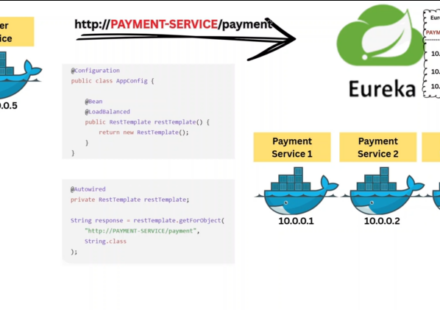
Service Discovery in Microservices: From Eureka to Kubernetes
In a microservices architecture, applications are split into multiple independent services. For example, an e-commerce application may consist of the following services: These services frequently communicate with each other. For example: Whenever the…
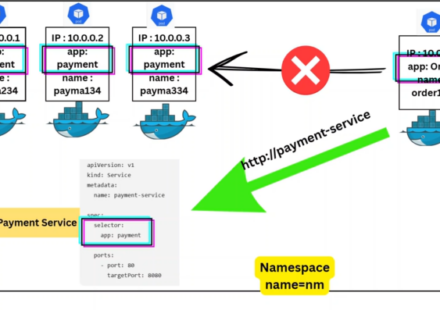
How Service Discovery Works in Kubernetes ?
In Kubernetes, service discovery is the mechanism that allows pods to find and communicate with other applications without needing to know their IP addresses. The Problem Pods are ephemeral: If applications connected directly to pod IPs, communication…